Eva Zeisel, 11/13/1906 - 12/30/2011
 Friday, December 30, 2011 at 9:14PM
 Eva Zeisel, the last of the 20th Century masters, passed away peacefully today. She arose, showered and dressed, sat in her chair, and soon afterward left us, I would like to think, to pursue her "playful search for beauty" in the great beyond.
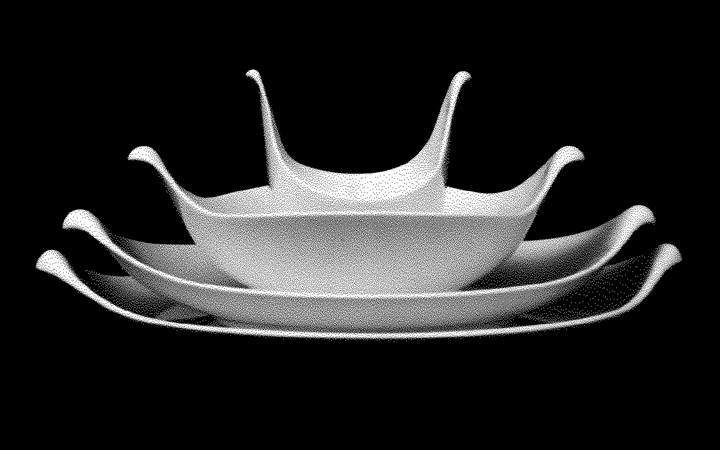
At Eva's 90th birthday, James Fulton, her student (Pratt 1951) and a major figure himself in industrial design, said that Eva "moved through all the modern movements yet was moved by none of them." She defied convention. During the sterile and, as Eva said, "anorexic" years when Modernist dogma commanded us to "reduce, reduce, reduce" designs to their simplest Euclidean form, she reveled in curves, color, and, yes, ornament. She said to me once that young designers will ornament their bodies with piercings or tattoos, yet it would be forbidden for them to add those ornaments to their designs. "The vase with the flower on it will never get the award. The student who presents in in class will get an F."
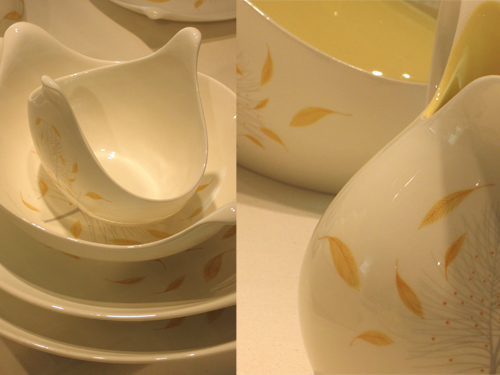
She mentored generations of designers, from her students at Pratt from 1939 to 1954, to young designers in the present, teaching us all that the playful search for beauty is in itself a noble goal.
She used the word "pretty."
When she leaned toward me in one of our conversations and said, "We are makers of pretty things," I recoiled as if struck. I come from the generation of industrial designers educated in the 80s, who faced some hard years in the trenches, defending our expertise to corporate types who hadn't a clue about what it was that we actually did. We never referred to our work as "making pretty things." In our client pitches, we loaded - and still load - our language with B-School grenades like "adding value" and "impacting the bottom line," endeavoring to break through the culture barrier in the corporate conference room. We fought an uphill battle - intuitives in a world that worshiped the quantifiable.
She rejected formulaic solutions.
In the 50s and 60s, the Museum of Modern Art endeavored to teach Americans what "good design" was. Zeisel was on one of their expert panels and refused to answer the question, "What is Good Design?" She refused to ordinate one design as "good-er" than another.
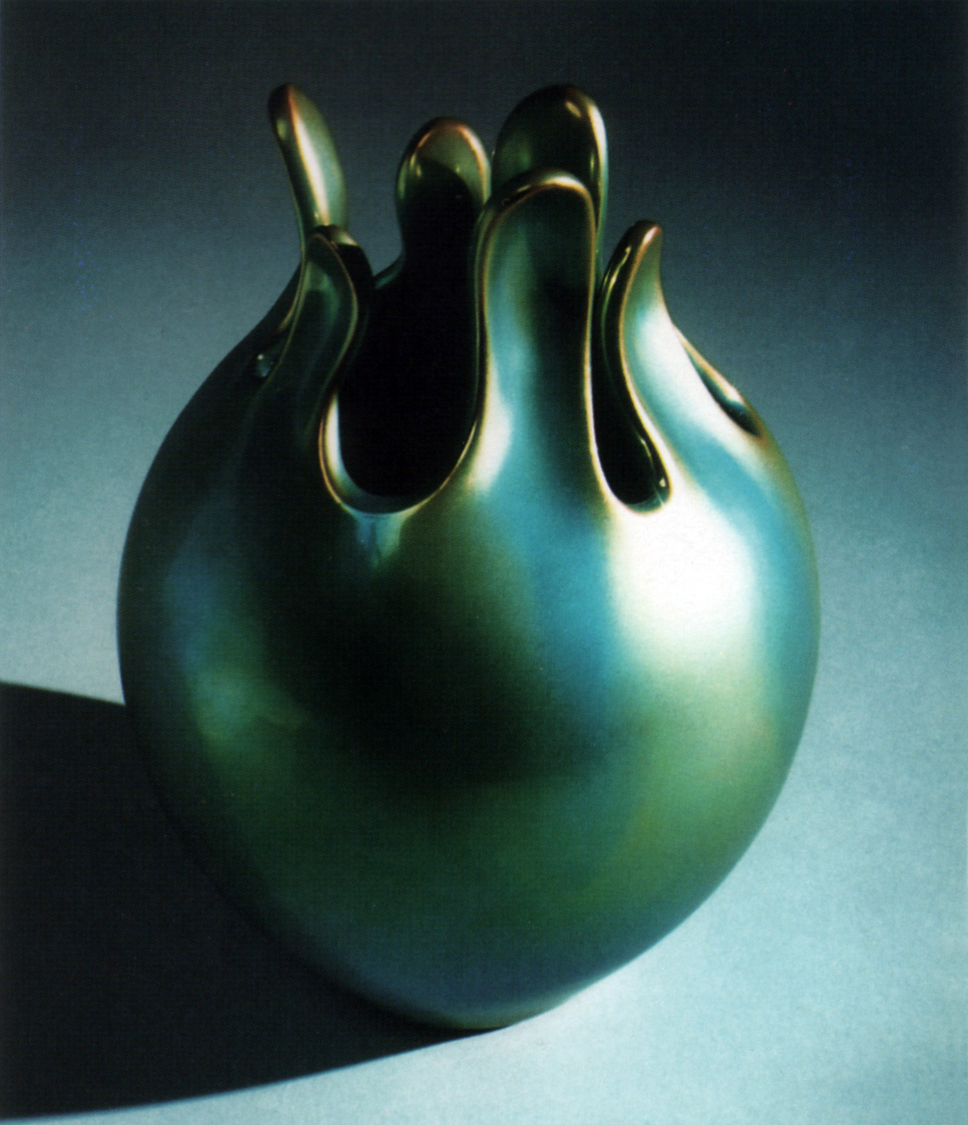
This does not mean that she settled for less than perfect. Comparing her work to others in her millieu, she made most look like slouches. Her pieces show a sure-footedness of line that knows exactly how a curve will start, where it will go, and how it will end.
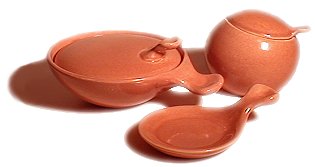
If you are lucky enough to see one of her designs in the flesh, and if you are even luckier to be able to put your hands on it, there is a visceral jolt at the touch, the feel of it. Just the other day I received in the mail one of her Town and Country casseroles. I had never held one. As I laid my hand on the handle, the sensation of that shape in my palm was electrifying. Her designs reward the hand.
She was a master of masters.
She created designs that were lauded by the design cognoscenti and also loved by ordinary people. She traveled the world and said that encountering her designs on kitchen tables from Kansas to Krakow was like seeing "so many well-behaved grandchildren."

These days, we talk alot about expressing emotion with our designs. One of the most important lessons I learned from Eva was that to her, design was not driven by a self-serving need to express herself; it was an act of generosity, giving a gift. She spoke of "making soul contact" with her public, in very much as the same way as Charles Eames' "guest-host relationship," where the designer is the gracious host.
My teachers were Modernists. Their teachers were Modernists. Their teachers teachers were Modernists. Under the 70-year thrall of Rationalism, the knowledge of how to sculpt curvilinear form, not to mention how to use color and apply ornament, was lost to us. As we strive to break the code today, Eva has much to teach us.

She was one of the keepers of the lost art. May she rest in peace.
William L. Hamilton's New York Times obit was published December 30, 2011, on page B7.
Eva Zeisel